Quick answer
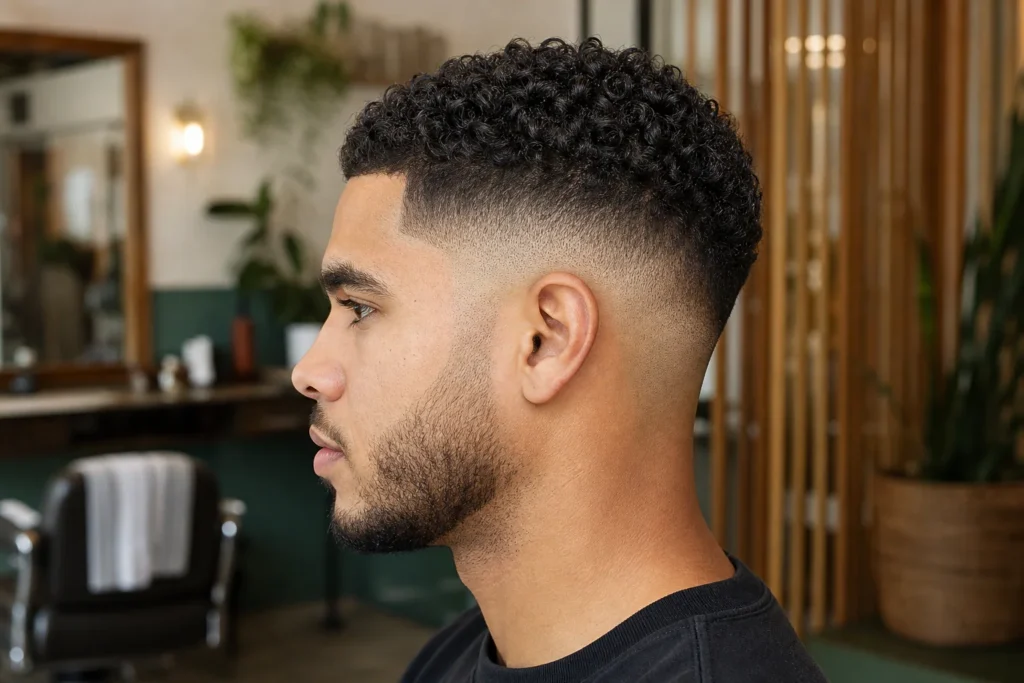
A skin fade blends the sides and back down to bare or nearly bare skin, then gradually transitions into longer hair. “Skin” describes the shortest finish; low, mid or high describes where the blend begins. Those are separate choices, so tell your barber both—and show where you want the fade to stop.
Choose the fade in 30 seconds
| If you want… | Ask for… | Know before you choose |
|---|---|---|
| A subtle clean-up with more weight left on the sides | Low skin fade | The bare section stays near the ear and neckline, but the bottom still grows out visibly. |
| A clear gradient without taking most of the side panel short | Mid skin fade | Usually the most obvious “fade” shape while retaining some weight above it. |
| Maximum contrast and very short sides | High skin fade | Exposes more scalp and changes the head silhouette more dramatically. |
| A softer grow-out or less scalp exposure | Zero fade or short taper | Ask what “zero” means in that shop; it may be a closed clipper, trimmer or another very short finish. |
If you are unsure, ask the barber to start lower and leave a faint shadow at the bottom. Hair can be taken shorter during the appointment; a fade that has already been pushed too high cannot be put back.
Skin fade, bald fade and zero fade: are they the same?
The terms overlap, and barbers do not use them identically. In many shops, skin fade and bald fade both mean that the bottom is finished to the skin with a foil shaver or razor. A zero fade often leaves the very short stubble made by a clipper or trimmer, but some barbers use “zero” for a skin-close result.
| Term | Common meaning | Best clarification |
|---|---|---|
| Skin or bald fade | Bare-looking finish at the base, blended into longer hair. | “Will you use a foil shaver or razor at the bottom?” |
| Zero fade | Very short base, often with a small amount of stubble remaining. | “Please leave a faint shadow—do not shave it smooth.” |
| Taper | A more localised blend at the sideburns and neckline, with more hair retained around the sides. | Point to the exact areas you want cleaned up. |
Numbers are not universal measurements either. Guard systems and tools vary, and the lever position changes the cutting length. Describe the visible result you want instead of relying on “number zero” alone.
Fade height and shortest length are different decisions
A useful consultation separates two questions:
- How short should the bottom be? Bare skin, very short stubble or a clearly visible short length.
- How high should that short area and its transition travel? Low, mid or high on the sides and back.
The height affects how much weight remains at the temples and above the ears. It also affects the overall silhouette: a high fade creates stronger contrast, while a low fade preserves more of the natural side shape. Your crown, cowlicks, scalp visibility, hair density and preferred top style are more useful considerations than rigid “face-shape rules”.
Exactly what to ask your barber for
A clear consultation script
“I’d like a [low / mid / high] fade. At the bottom, take it to [bare skin / very short stubble]. Keep the blend below [point to the height] and leave enough weight here [point above the temples or crown]. On top, keep [length] so I can wear it [your usual style].”
Bring one or two photos and explain what you like in each. Before the cut begins, agree on:
- the shortest finish at the base;
- the highest point the fade should reach;
- whether the transition should look soft or show strong contrast;
- how much bulk to keep around the temples, parietal ridge and crown;
- the finished length, texture and direction on top;
- whether the front hairline and neckline should look natural or sharply edged.
A photo communicates the shape, but it does not guarantee the identical result. Hair growth, density, head shape and previous cuts all change what is possible. A good barber should explain how the reference will translate to your hair.
What happens during a skin fade?
The barber normally establishes the shortest area, creates guide lines with clippers, and blends those lines with progressively longer settings. They may use a trimmer, foil shaver or razor to make the base look bare. Scissor or clipper work then connects the fade to the top, and the outline is refined around the ears and neckline.
A visible line immediately after the cut can mean the transition needs more blending, but lighting and pale scalp beneath darker hair can also exaggerate contrast. Check the cut from the front, both sides and the back before you leave. If something looks wrong, point to the exact area and ask whether it can be softened without taking the entire fade higher.
How long does a skin fade last?
The skin-close finish starts becoming stubble within days. That does not mean the haircut has failed; it is the normal grow-out of a cut built around extreme shortness. How long the overall shape looks tidy depends on growth rate, colour contrast, fade height and how sharp you expect the edges to be.
| Your priority | Typical approach |
|---|---|
| Keep the base looking skin-close | A neck and edge clean-up, or a fade refresh, roughly every 1–2 weeks. |
| Keep the overall haircut balanced | A full cut roughly every 2–4 weeks, adjusted for your growth and top style. |
| Spend less time maintaining it | Choose a low fade, zero fade or taper with a less severe shortest point. |
These are planning ranges, not rules. Ask your barber what will happen as your cut grows out and when a full reshaping is more useful than an edge clean-up.
Skin comfort, razor bumps and sensitive scalps
A skin fade is not automatically suitable for every scalp. Shaving extremely close can contribute to irritation and ingrown hairs, particularly if you already develop razor bumps. Tell the barber before the service if you have active irritation, cuts, raised bumps, a recurring rash or a condition affected by close shaving. Ask them to leave short stubble instead of using a foil shaver or razor if that is more comfortable for you.
After the cut, use gentle products, avoid picking or repeatedly shaving over irritated areas, and protect newly exposed scalp from strong sun. Persistent, painful, spreading or scarring bumps need advice from a GP or dermatologist, not another closer shave. The American Academy of Dermatology provides dermatologist-reviewed guidance on shaving technique and preventing razor bumps.
Which top styles work with a skin fade?
The fade is the sides-and-back component, not a complete haircut. It can be connected to a crop, curls, a buzz cut, quiff, pompadour, side part or longer textured top. The most important question is how the top will connect to the short sides.
- Short crop or buzz cut: low daily styling, but the fade and hairline become prominent.
- Curls or texture: contrast can frame the top; agree on how much weight to retain at the ridge.
- Quiff or swept-back top: needs enough front length and usually some product or blow-drying.
- Long top or disconnected style: creates a dramatic transition and requires a clear plan for the overhang.
For a broader comparison of fade shapes, see our guide to fade haircuts.
Common skin fade mistakes—and how to avoid them
| Problem | Prevention |
|---|---|
| The fade is much higher than expected | Point to the maximum height and say “do not take the shortest section above this point”. |
| Too much scalp is visible | Ask for a zero or shadow finish instead of bare skin. |
| The top looks disconnected unintentionally | Agree on whether to retain or remove the weight line before cutting. |
| The crown sticks up as the cut grows | Show the barber your natural crown and discuss whether it needs more length. |
| The base becomes irritated | Disclose previous razor bumps and request clippers only or a longer minimum length. |
Skin fade questions, answered
Is a skin fade the same as a number zero?
Not reliably. A skin fade normally looks bare at the bottom; a number zero often leaves very short stubble. Tool settings and shop terminology differ, so describe whether you want visible stubble or bare-looking skin.
Should I wash my hair before the appointment?
Arrive with reasonably clean, dry hair and without heavy product unless the shop tells you otherwise. This lets the barber see natural growth patterns and density.
Can I get a skin fade with thinning hair?
Yes, but the contrast may make some areas look fuller and others more exposed. Ask the barber to assess the result in natural light and discuss a lower or softer fade if scalp contrast is a concern.
How do I find a barber who does skin fades?
Look at recent, unfiltered examples of the barber’s fade work across hair types similar to yours. Then check location, opening hours and booking details in the Barber.Style Australian directory. A portfolio shows technical style; a short consultation confirms whether the barber understands your preferred height and finish.
Editorial note: Terminology varies between barbers and regions. Health information here is general and is not a diagnosis. This guide was substantially rewritten and reviewed for practical usefulness in July 2026.
Recommended for this guide
Practical tools for straightforward buzz-cut upkeep
As an Amazon Associate I earn from qualifying purchases. How affiliate links work