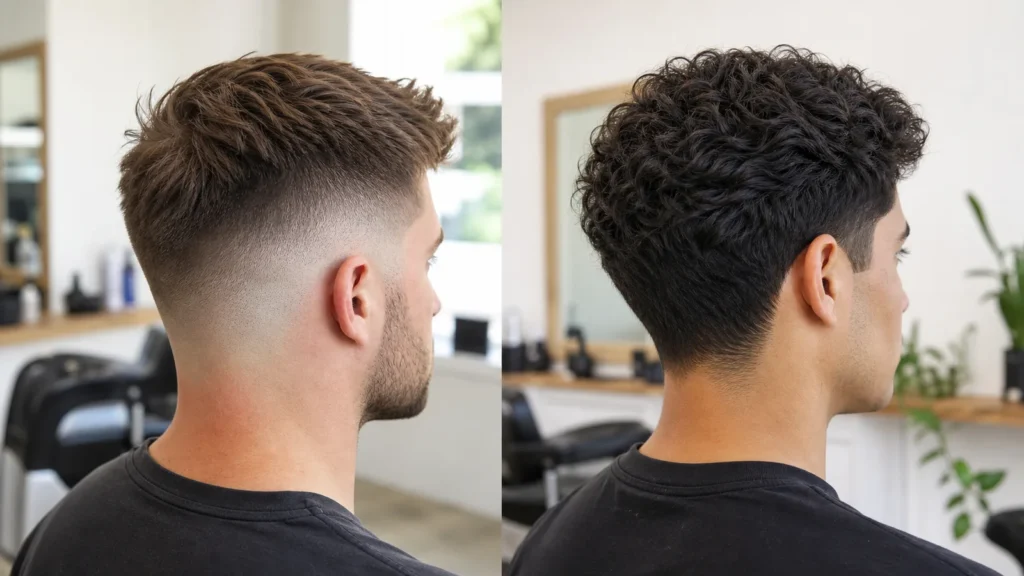
A mid fade creates a gradient across the middle portion of the sides and back. A mid taper reaches moderately above the sideburn and neckline but leaves more hair through the main side panel.
The visible difference
| Choice | Side view | Best when you want |
|---|---|---|
| Mid fade | A broad, obvious short-to-long transition around the head | Clear contrast and less bulk through the sides |
| Mid taper | Shorter temple and neckline areas with darkness retained above and behind the ear | A cleaner outline without exposing most of the side |
Neither term specifies the shortest length. Both can start at skin, zero, 0.5 or longer.
Use these barber requests
For a mid fade:
“Mid fade around the sides and back, starting at a number 0.5. Keep the transition below the temple and leave enough weight to connect to the top.”
For a mid taper:
“Mid taper at the sideburns and neckline, starting at a number 0.5. Keep the area above and behind the ear dark—no full fade through the side panel.”
Face shape and hair texture
A mid fade can make a longer top look narrower and more prominent. Keeping extra side weight with a taper can balance a longer or narrower face. Dense curls may create a striking contrast with either; fine straight hair can show blend lines more easily, so a slightly longer base may look smoother.
Grow-out
A mid skin fade loses its just-cut contrast quickly and is commonly refreshed every two to three weeks. A mid taper usually grows out more quietly and can last three to five weeks. If you are unsure, start with a 0.5 or 1 rather than skin—you can always go shorter before leaving the chair.
Recommended for this guide
Tools for careful fade upkeep between appointments
As an Amazon Associate I earn from qualifying purchases. How affiliate links work