A modern mullet keeps visible length at the back but uses softer layers, texture and more deliberate side work than the sharply disconnected versions associated with past decades.
Four decisions define the result
- Back length: upper neck is subtle; collar length is obvious; shoulder length is a commitment.
- Sides: scissor-short sides look softer, a taper cleans only the edges, and a burst fade creates strong separation around the ear.
- Top: a short textured top is easy to style; more length supports curls, waves or a swept shape.
- Connection: blended layers feel wearable; a disconnected step looks sharper and grows out more visibly.
What to ask your barber
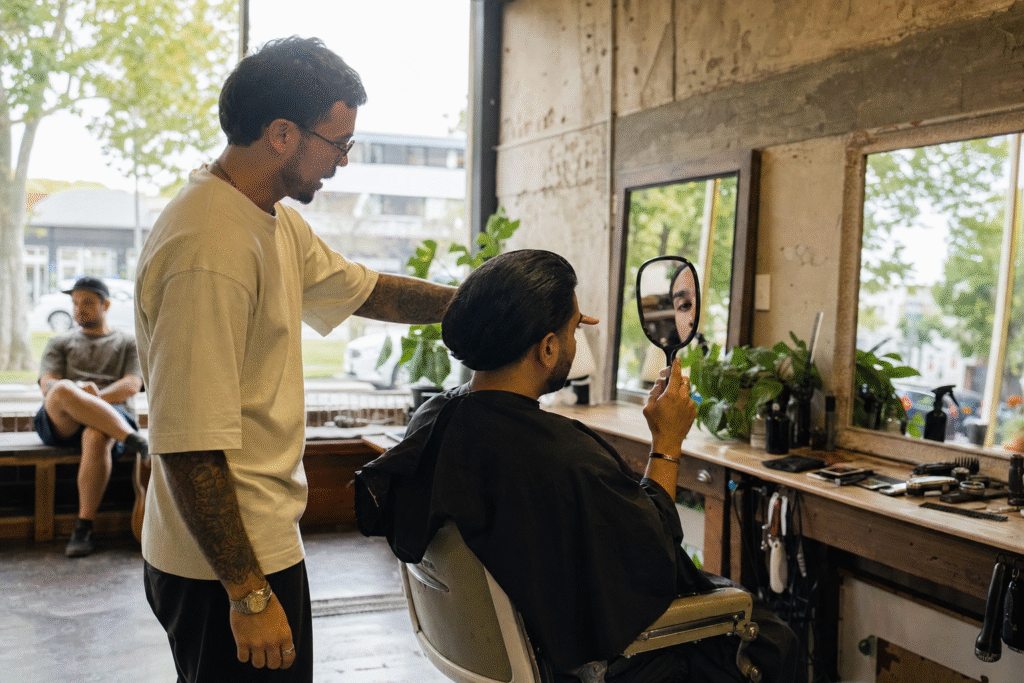
“I want a modern mullet with the back kept to the upper neck, soft layers rather than a thin tail, and a low taper around the sideburns. Keep about 7 cm on top so I can wear my natural texture. Blend the crown into the back.”
Bring side and rear photos. “Mullet” describes a family of shapes, not one fixed cut.
Choose sides for your lifestyle
| Side treatment | Effect | Upkeep |
|---|---|---|
| Scissor cut | Softest, least exposed | About 6–8 weeks |
| Low taper | Clean edges, fuller side | About 3–5 weeks |
| Burst fade | Strong curve around ear | About 2–4 weeks |
Styling
Start with damp hair. Use a light curl cream for curls, sea-salt or texture spray for waves, or a small amount of matte paste for straighter hair. Work product through the crown and back, not only the fringe. Air-dry for a softer finish or diffuse on low heat to keep curl shape.
Growing one out
Tell the barber to preserve the nape and crown while tidying the sides and split ends. The awkward stage is usually the crown-to-back connection; removing bulk there without cutting away the back length keeps the intended shape.
Recommended for this guide
Add matte texture and definition
As an Amazon Associate I earn from qualifying purchases. How affiliate links work